The Command Center: Understanding Your Central Nervous System (CNS)
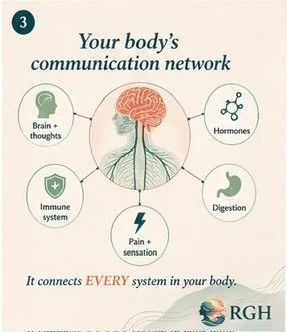
To understand why chronic illness makes you feel the way it does, we first need to look at your body's ultimate control room: the Central Nervous System.
The CNS consists of two main parts:
The Brain: The processor where thoughts, emotions, and sensory interpretations (like pain) happen.
The Spinal Cord: The superhighway that carries messages back and forth between your brain and the rest of your body (the peripheral nervous system).
Normally, your nervous system is a perfect alarm system. If you touch a hot stove, the nerves in your hand send a signal up your spinal cord to your brain. Your brain registers "DANGER! HOT!" and you pull your hand away. Once the threat is gone, the alarm turns off.
But what happens when the alarm gets stuck in the "ON" position?
What is Central Sensitization? (The "Stuck Alarm")
Central Sensitization is a condition where the Central Nervous System becomes highly reactive, wired, and hypersensitive. It undergoes a physical rewiring—a phenomenon called neuroplasticity—but in a negative direction.
Instead of turning off after an injury or illness passes, the CNS stays on high alert. This causes two major issues:
Allodynia: Feeling pain from things that shouldn't hurt at all (like a gentle hug, the brushing of clothes against your skin, or even a change in weather).
Hyperalgesia: Feeling an extreme amount of pain from something that should only hurt a little (like a minor bump feeling like a broken bone).
When your CNS is sensitized, it’s like living in a house where the smoke detector goes off not just for a fire, but when you boil water, when you light a candle, or even when the sun shines through the window. It is exhausting, and it is not in your head—it is a physiological change in your nerves.
How Chronic Disease Hijacks the CNS
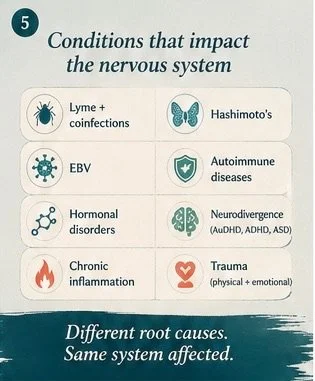
How does a person get to this state? Central Sensitization is almost always driven by chronic, relentless inflammation. When the body is fighting a long-term battle, the constant barrage of immune signals crosses the blood-brain barrier and activates microglial cells (the immune cells of the brain). This neuroinflammation puts the brain in a state of chronic defense.
Here is how specific conditions common in the RGH community trigger this:
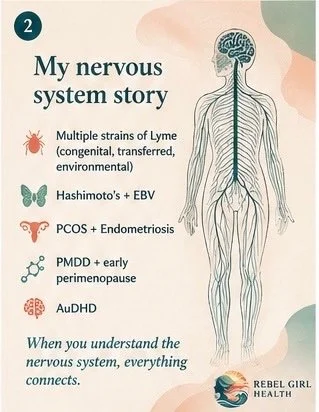
1. Chronic Lyme Disease
Lyme disease is caused by a corkscrew-shaped bacteria (a spirochete) that is excellent at hiding in deep tissues and nerve endings.
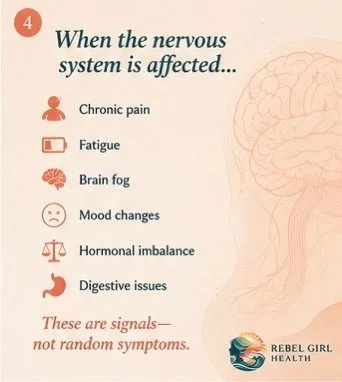
The CNS Impact: The bacteria and the immune system's constant, low-grade war against it create systemic inflammation. This inflammation crosses into the brain, causing neuroinflammation. The constant signaling from damaged peripheral nerves eventually trains the CNS to expect pain and fatigue, leading to Central Sensitization and the classic "brain fog" and widespread pain associated with Chronic Lyme.
2. Hashimoto’s Thyroiditis
Hashimoto’s is an autoimmune disease where the body attacks the thyroid gland.
The CNS Impact: The thyroid controls your metabolism, which includes how your brain utilizes energy. When the immune system attacks the thyroid, it creates a massive inflammatory response. Furthermore, many women with Hashimoto's have antibodies that directly interact with brain tissue. This systemic inflammation keeps the nervous system on edge, contributing to the fatigue, joint pain, and heightened pain sensitivity often misdiagnosed as fibromyalgia.
3. Rheumatoid Arthritis (RA) & Sciatica
Both of these involve intense, localized pain—RA in the joints (autoimmune) and Sciatica in the primary nerve of the leg (mechanical/inflammatory).
The CNS Impact: If you have severe joint pain or nerve impingement for months or years, those pain pathways are firing constantly. Over time, the spinal cord and brain adapt to this constant screaming by adding more pain receptors. Even if you manage to calm the RA with medication, or fix the compressed sciatic nerve, the brain has already "learned" the pain, resulting in a sensitized CNS.
4. PMDD (Premenstrual Dysphoric Disorder)
PMDD is often misunderstood as simply "bad PMS," but it is actually a severe neuro-endocrine disorder.
The CNS Impact: Women with PMDD do not necessarily have abnormal hormone levels; instead, their Central Nervous System has an abnormal, hyper-sensitive reaction to normal hormonal fluctuations (specifically the drop in estrogen and progesterone/allopregnanolone). These hormones deeply influence GABA—the brain's primary calming neurotransmitter. In PMDD, the CNS loses its ability to calm down during the luteal phase, leading to severe mood shifts, bodily pain, and cognitive distress.
The Good News: Reversing Central Sensitization
Because the brain is plastic (neuroplasticity), it can be rewired. If the CNS can learn to be hyper-sensitive, it can be taught to feel safe again. As we build the RGH Library, we will focus on these functional medicine pillars for healing the CNS:
Dampening Inflammation: Identifying and removing the root causes of systemic inflammation (like mold, undiagnosed infections, inflammatory foods, or environmental toxins) so the microglial cells in the brain can stand down.
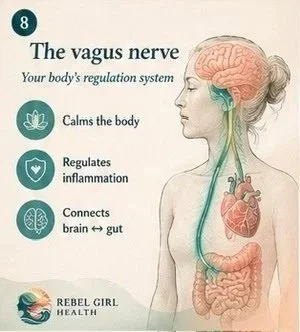
Vagus Nerve Stimulation: The Vagus nerve is the biological brake pedal for the nervous system. Practices like deep diaphragmatic breathing, cold exposure, humming, and targeted functional therapies can "tone" this nerve, telling the brain it is safe.
Somatosensory Retraining: Working with physical therapists or functional specialists to slowly re-introduce movement without triggering the "danger" response.
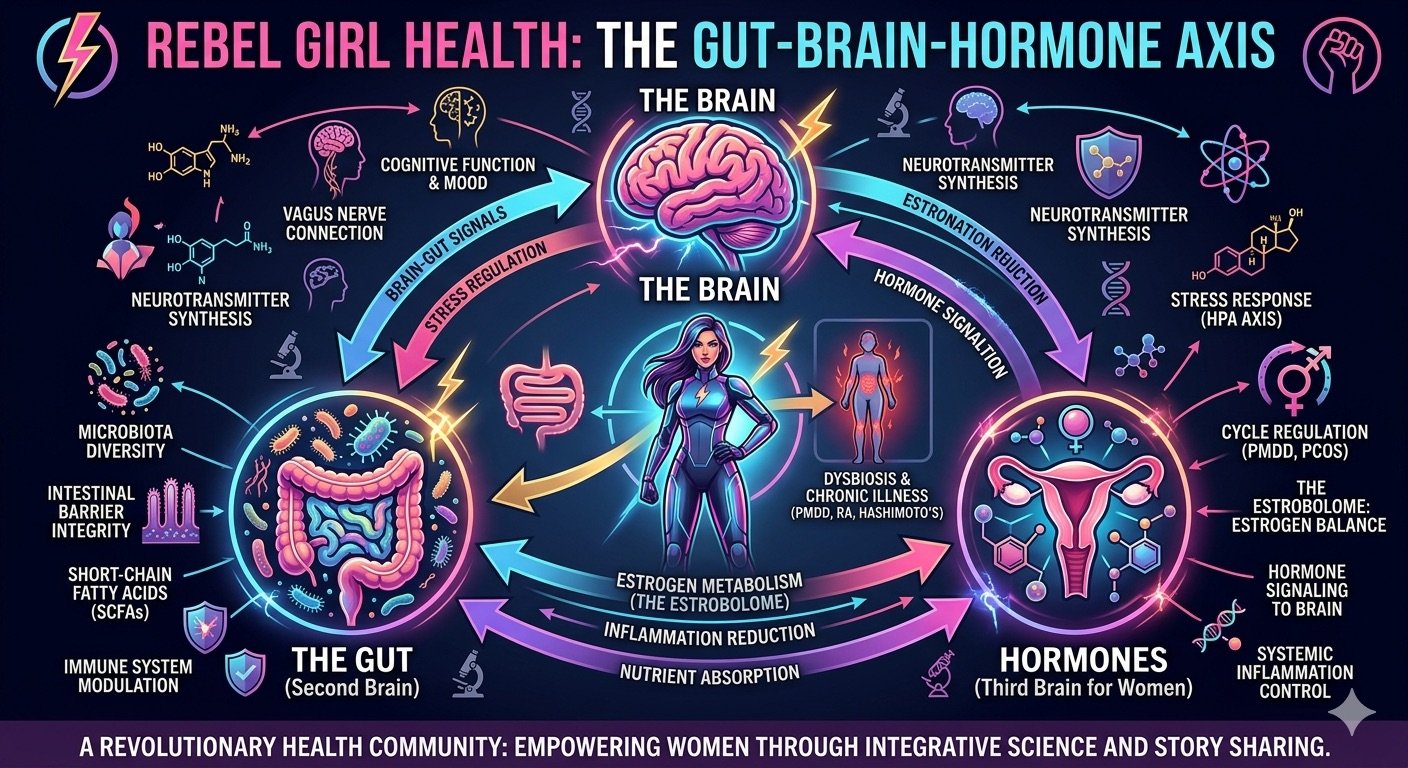
Addressing the Gut-Brain Axis: Healing leaky gut, as a massive portion of neurotransmitters (like serotonin) are made in the gut. If the gut is inflamed, the brain is inflamed.
Acupuncture & Neuromodulation
Rewiring Inflammation, Hormones, and the Female Nervous System
For more than a century, modern research largely ignored female biology. Hormonal complexity was labeled “too variable.” Pain without clear imaging was dismissed. Conditions like PMDD, Hashimoto’s, chronic Lyme, and autoimmune arthritis were treated symptom by symptom — rarely system by system.
Acupuncture did not fit into that framework. So it was sidelined.
Not because it didn’t work.
Because the mechanism wasn’t understood.
Now it is.
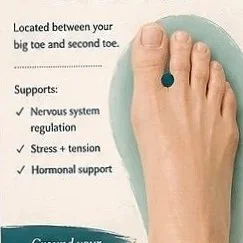
Emerging neuroanatomical research shows that acupuncture points are dense hubs of sensory neurons. When stimulated, they transmit measurable electrical signals to the brain. What Traditional Chinese Medicine described as the movement of Qi, modern neuroscience recognizes as neuromodulation.
Acupuncture is not mystical.
It is electrical communication with the nervous system.
The Biology: How Acupuncture Flips the Inflammatory Switch
Acupuncture is not “just relaxing.” It creates measurable biochemical shifts.
1. The Vagus Nerve Reset
Electroacupuncture has been shown to activate the vagal-adrenal axis. This pathway stimulates the adrenal glands to release dopamine and other anti-inflammatory mediators that suppress excessive cytokine activity.
For women dealing with autoimmune flares, this matters.
Cytokine storms drive inflammation in conditions like RA, Lyme, and Hashimoto’s. Acupuncture acts like a systemic fire extinguisher.
2. HPO & HPA Axis Regulation
The Hypothalamic-Pituitary-Ovarian (HPO) axis governs reproductive hormones. The Hypothalamic-Pituitary-Adrenal (HPA) axis governs stress response.
In PMDD, the brain overreacts to normal hormonal fluctuations. Acupuncture modulates this over-firing, helping stabilize mood shifts, luteal crashes, and cortisol spikes.
This is endocrine regulation through nervous system regulation.
3. Endorphins, Enkephalins & Natural Pain Control
Acupuncture stimulates endogenous opioid release — the body’s own painkillers.
Unlike synthetic opioids, these compounds:
Do not suppress respiration
Do not create chemical dependency
Work within the body’s regulatory system
This makes acupuncture particularly valuable for chronic nerve pain such as sciatica or neuropathy.
Invisible Conditions, Visible Results
Many of the most disruptive female conditions are neurologically mediated but poorly visualized on scans.
Acupuncture addresses the circuitry behind them.
Hashimoto’s & Rheumatoid Arthritis
Modulates T-cell activity
Reduces inflammatory signaling
Supports immune regulation without broad suppression
PMDD
Regulates luteal phase hormone metabolism
Reduces cortisol
Stabilizes emotional reactivity
Lyme & Chronic Inflammation
Improves microcirculation
Reduces neuroinflammation
Supports cognitive clarity
Chronic Stress & Trauma
Shifts from sympathetic dominance (fight/flight)
Enhances parasympathetic repair states
Pain is not “in your head.”
It is in your nervous system.
Acupuncture speaks directly to that system.
Neuroacupuncture: When the Brain Is the Battlefield
For women navigating neurodivergence, trauma, or chronic illness, the nervous system is often in a state of hyper-vigilance.
Neuroacupuncture targets specific scalp and body regions associated with brain networks.
Anxiety & Depression
Modulates the Default Mode Network
Reduces amygdala overactivity
Enhances serotonin and dopamine signaling
ADHD & Autism
Supports synaptic plasticity
Reduces sensory overload
Improves focus regulation
Migraines
Deactivates trigeminovascular pain pathways
Lowers CGRP levels associated with attacks
Sciatica & Neuropathy
Promotes neurotrophic growth factors
Interrupts the pain-spasm-pain cycle
For highly sensitized nervous systems, acupuncture functions as a grounding wire. It filters background “static,” allowing regulation instead of redlining.
The Rebel Insight
When your back is in pain, your brain shifts into threat mode.
Threat mode increases inflammatory signaling.
Inflammation aggravates autoimmune activity.
Everything is connected.
By treating nerve pain, you simultaneously signal safety to the immune system. The body does not compartmentalize the way medicine often does.
Healing is holographic.
The Rebel Girl Lifestyle Protocol
Turning Science Into Rhythm
Information overload does not create healing. Daily rhythm does.
This is the structural foundation of the Rebel Girl Health Library.
The Daily Rebellion (Non-Negotiables)
Simple nervous system anchors:
Morning adrenal mineral reset
Vagus nerve activation practices
Dance walking or rhythmic movement
Breath regulation
These prevent the nervous system from redlining.
The Weekly Deep Dive
Layer in:
Acupuncture sessions for biochemical rewiring
Chakra or somatic emotional clearing
Targeted herbal support (turmeric, adaptogens)
This is precision work layered onto stable foundations.
Whole Food Medicine
Remove inflammatory drivers:
Ultra-processed foods
Industrial seed oils
High-sugar processed products
Replace with:
Mineral-rich broths
Anti-inflammatory whole foods
Gut-supportive fats
Food is information to the immune system.
The Morning Adrenal Reset
A simple mineral restoration protocol:
12–16 oz warm filtered water
2 tablespoons fresh lemon juice
1/8–1/4 teaspoon fine sea salt
Optional: 1 teaspoon raw honey
Start low with salt. It should taste soft, not briny.
During high stress or inflammatory flares, the higher end of the salt range may be supportive.
Rebel Glow: Kitchen-Based Skincare
Raw Honey & Lavender Cleanser
Ingredients:
1/3 cup raw honey
1/3 cup liquid castile soap
2 tablespoons jojoba or sweet almond oil
10 drops lavender essential oil
Why it works:
Honey is antibacterial without disrupting the skin microbiome — especially important for women with autoimmune conditions.
Garden Detox Mask
Ingredients:
1 tablespoon Greek yogurt
1 teaspoon raw honey
1/2 teaspoon turmeric
Optional crushed rosemary
Apply for 10–15 minutes.
Turmeric may lightly stain. A few drops of olive oil can assist removal.
Final Word
Acupuncture is not an “alternative.”
It is neuromodulation.
It regulates inflammation.
It stabilizes hormones.
It calms hyper-vigilant circuitry.
In a system that often dismisses women’s pain as emotional, acupuncture is an act of precision listening.
This is not rebellion for rebellion’s sake.
It is rebellion rooted in biology.
The Clinical Application of Acupressure for Female Health
An Integrative Guide to Hormones, Pain, and Nervous System Regulation
Acupressure is a low-risk, non-invasive therapeutic modality rooted in Traditional Chinese Medicine (TCM). By applying focused pressure to specific anatomical points (acupoints), practitioners and individuals can influence pain pathways, hormonal balance, and autonomic nervous system regulation—without needles.
In modern integrative healthcare, acupressure is increasingly recognized as a practical self-care tool for menstrual disorders, PMS, menopausal symptoms, and stress-related imbalances. Its accessibility makes it uniquely powerful: once learned, it can be practiced independently.
This guide bridges Traditional Chinese Medicine theory with contemporary biomedical understanding to support female health across the lifespan.
Foundational Concepts: Where TCM Meets Physiology
How Acupressure Works
Current research suggests two primary mechanisms behind acupressure’s effectiveness:
1. Endogenous Opioid Activation
Stimulation of key points—especially Sanyinjiao (SP-6)—activates the body’s natural pain-relief system. This encourages the release of endorphins and other neuropeptides in the central nervous system, helping reduce menstrual pain and chronic discomfort.
2. Autonomic Nervous System Regulation
Acupoint stimulation increases parasympathetic (rest-and-digest) activity. Research measuring heart rate variability shows improved autonomic balance following acupressure, meaning the body becomes better at regulating stress, inflammation, and emotional responses.
This dual action—pain modulation and nervous system stabilization—makes acupressure especially effective for gynecological and stress-driven conditions.
The Three Pillars of Female Health in TCM
Traditional Chinese Medicine identifies three primary organ systems as foundational to female reproductive health:
The Kidney (Shen)
Governs Essence (Jing), growth, reproduction, and aging.
Decline in Kidney Essence is associated with menopause.
Key Point: KI-3 (Taixi) supports vitality and hormonal balance.
The Liver (Gan)
Regulates the smooth flow of Qi.
Stores Blood and governs menstruation.
Imbalance presents as irritability, PMS, emotional tension.
Key Point: Liv-3 (Taichong) moves stagnant Qi.
The Spleen (Pi)
Produces postnatal Qi and Blood.
Supports digestion and fluid metabolism.
Deficiency presents as fatigue, bloating, edema.
Key Point: SP-6 (Sanyinjiao) harmonizes all three systems.
SP-6 is particularly powerful because it is the intersection of the Spleen, Liver, and Kidney meridians. Stimulating this single point creates a systemic regulatory effect rather than targeting isolated symptoms.
Menstrual Cycle Support & Dysmenorrhea Protocols
Primary Dysmenorrhea (Menstrual Cramps)
SP-6 (Sanyinjiao): The Master Regulator
Location:
Four finger-widths above the inner ankle bone, just behind the tibia.
Technique:
Apply firm, tolerable pressure for 60 seconds. Repeat on the opposite leg. Pressure should feel tender but never bruising.
Clinical Insight:
Research shows immediate pain relief is possible, but maximal benefit typically occurs after consistent use for three consecutive menstrual cycles. Acupressure retrains the neuro-hormonal system over time.
Supporting Points
SP-8 (Diji): Acute menstrual pain.
SP-9 (Yinlingquan): Cramps with bloating or fluid retention.
Liv-3 (Taichong): Emotional PMS symptoms.
PC-6 (Neiguan): Anxiety, nausea, chest tension.
SP-10 (Xuehai): Blood stagnation patterns (sharp pain, fibroids, endometriosis).
Timing Matters
For preventative regulation:
Begin five days before menstruation.
Stimulate points twice daily.
For acute pain:
Increase to up to five times daily during menstruation.
Consistency is more important than intensity.
Menopause & Hormonal Transitions
In TCM, menopause reflects declining Kidney Yin and Essence. Symptoms such as hot flashes, insomnia, and anxiety arise when internal heat is no longer anchored.
Managing Hot Flashes
Primary Points:
SP-6 – Nourishes Blood and Yin.
KI-3 (Taixi) – Strengthens Kidney Essence.
CV-4 (Guanyuan) – Tonifies foundational energy.
LI-4 (Hegu) – Clears heat and regulates circulation.
Clinical research demonstrates significant improvements in hot flash severity and overall menopause rating scores when acupoint stimulation is integrated into care.
Sleep & Anxiety Support
Declining Yin often results in restlessness and disturbed sleep.
HT-7 (Shenmen): Calms the spirit.
PC-6 (Neiguan): Regulates emotional distress.
Yintang: Located between the eyebrows; reduces acute stress.
Meta-analyses indicate acupressure significantly improves sleep quality in menopausal women.
Enhancing Vitality & Energy
Preventative care is foundational in TCM.
ST-36 (Zusanli): The Longevity Point
Location:
Four finger-widths below the kneecap, one finger-breadth lateral to the shin.
Benefits:
Tonifies Qi and Blood, supports digestion, combats fatigue, strengthens overall vitality.
CV-6 (Qihai)
Located two finger-widths below the navel.
Strengthens core energy reserves.
Fatigue often precedes hormonal imbalance. Supporting energy production protects long-term reproductive health.
Stress & Emotional Regulation
Chronic stress impairs Qi flow and exacerbates pain.
The Four Gates Protocol
Simultaneously stimulate:
LI-4 (Hegu)
Liv-3 (Taichong)
This harmonizes Qi circulation throughout the body.
Yintang
Gentle circular massage between the eyebrows reduces anxiety and calms the nervous system.
Critical Safety Guidelines
Acupressure is generally low-risk—but certain points are strictly contraindicated during pregnancy (before 37 weeks) due to uterine stimulation risk.
Do NOT Use During Pregnancy:
SP-6 (Sanyinjiao)
LI-4 (Hegu)
CV-3 / CV-4
BL-60 / BL-67
These points strongly move Qi and Blood and may induce contractions.
Additional caution:
Avoid deep pressure in the inner legs during pregnancy due to increased DVT risk.
Consult a healthcare provider if managing clotting disorders, complex chronic illness, or psychiatric medication protocols.
Application Guidelines
Use firm, moderate pressure.
Points should feel tender but not unbearable.
Breathe slowly while applying pressure.
Stop if pain increases or bruising occurs.
Clinical Takeaways
1. Systemic Modulation Over Quick Fixes
Points like SP-6 require consistent application over multiple cycles to restore regulation. Acupressure modulates physiology—it is not merely an analgesic.
2. Dual-Action Protocols Are Most Effective
For menopause, combine points that nourish deficiency (KI-3, CV-4) with points that manage symptoms (LI-4, HT-7).
3. Safety Is Non-Negotiable
The same power that makes certain points effective for menstrual regulation makes them contraindicated during pregnancy.
Practical Recommendations
For chronic menstrual pain:
Begin five days before your period and continue for three consecutive cycles.
For acute stress:
Use Liv-3 for emotional tension and PC-6 for anxiety or nausea.
For long-term vitality:
Stimulate ST-36 regularly to maintain strong Qi and Blood reserves.
Always prioritize safety and consult a qualified practitioner when managing complex conditions.
Acupressure offers a structured, research-supported, non-pharmacological pathway for supporting female health—from menstruation to menopause.
Consistency builds regulation.
Regulation builds resilience.
Aromatherapy & Sacred Smoke
Scent as Medicine. Ritual as Regulation.
Aromatherapy belongs alongside chakras, acupressure, acupuncture, and other energy-based healing practices. These systems have endured for centuries because they work with the body, not against it.
There’s a reason cultures that prioritize daily rituals, plant medicine, and nervous system regulation tend to age with resilience and vitality. Health is not accidental. It is practiced.
In this library, we teach each modality thoroughly—but in digestible pieces. The balance matters. Too clinical, and people shut down. Too light, and they don’t take it seriously. The sweet spot is where warmth meets science.
Here’s the truth: people don’t change until something resonates. One sentence. One symptom. One insight that hits close to home. When you understand your audience deeply, you learn how to reflect back exactly what they need. Education builds trust. Trust builds community. Community builds business.
Now, the teaching moment.
The Power of Scent: Why Aromatherapy Works
The olfactory system is one of the most overlooked regulators of human biology.
It is the only sensory system that bypasses the brain’s relay station (the thalamus) and connects directly to the limbic system—the emotional and memory centers of the brain (amygdala and hippocampus).
That means scent is the fastest pathway to influence your nervous system.
This isn’t about “nice smells.”
It’s about neurochemistry.
When you inhale a pure essential oil or sacred smoke, aromatic molecules travel through the nose to the olfactory bulb and signal the brain to shift its chemical state almost instantly.
Need to calm a panic response? Scent can downshift the nervous system rapidly.
Need to wake up mental fog? Scent can stimulate alert neurotransmitters within seconds.
For the Rebel Girl, scent is not a luxury.
It is a tool.
Essential Oils: Plant Chemistry in Liquid Form
If you want therapeutic effects, quality matters. Choose 100% pure essential oils from reputable sources. Synthetic fragrance oils do not provide the same biological impact—and your body still has to process what you inhale.
Frankincense
The Vibe: Ancient, grounding, sacred
The Science: Contains boswellic acids known for anti-inflammatory properties and immune support.
Rebel Use: Support during autoimmune flare-ups or meditation. Always dilute with a carrier oil before applying to skin.
Lavender
The Vibe: Comfort, calm, sleep
The Science: Research supports its ability to reduce cortisol and support relaxation.
Rebel Use: The “panic button.” Inhale directly during anxiety spikes or diffuse before bed.
Peppermint
The Vibe: Focused, cool, energizing
The Science: Menthol acts as a natural analgesic and increases alertness.
Rebel Use: Helpful for headaches or brain fog. Apply diluted oil to temples or back of neck (avoid eyes).
Lemon & Wild Orange
The Vibe: Uplifting, bright, motivating
The Science: Rich in limonene, associated with mood elevation and lymphatic support.
Rebel Use: Inhale before workouts, creative sessions, or important conversations.
Tea Tree (Melaleuca)
The Vibe: Clean, protective, clarifying
The Science: Strong antibacterial and antifungal properties.
Rebel Use: Physical cleansing and energetic boundary-setting.
Sacred Smoke: Clearing and Resetting Space
Across cultures, women healers have used smoke as a cleansing and medicinal tool. Modern research supports what tradition already knew: certain medicinal smokes can significantly reduce airborne microbes.
Ritual and biology are not opposites. They work together.
White Sage
Purpose: Clearing and resetting space
The Science: Research suggests medicinal smoke can reduce airborne bacteria significantly for extended periods.
The Ritual: Open a window. Light the bundle. Walk the perimeter of your room slowly. Intentionally clear stagnant energy.
Affirmation:
“I cleanse this space of heaviness. Only clarity and calm remain.”
Palo Santo
Purpose: Inviting warmth and grounded energy
The Difference: If sage clears, Palo Santo fills. Its scent is softer and slightly sweet.
The Ritual: Use after clearing practices to reintroduce intention and steadiness.
Chakra-Aligned Incense
Use scent intentionally to support energy centers.
Root (Stability): Cedarwood, Patchouli, Vetiver
Sacral (Creativity/Hormones): Ylang Ylang, Sweet Orange
Solar Plexus (Power/Digestion): Ginger, Lemongrass
Heart (Love/Immunity): Rose, Jasmine
Throat (Expression/Thyroid): Eucalyptus, Sage
Third Eye (Intuition): Sandalwood, Clary Sage
Crown (Connection): Frankincense, Myrrh, Lotus
The 2-Minute Rebel Reset
Pair this with your somatic stretching or morning activation.
Light incense or sacred smoke. Let the rising smoke signal your body to slow down.
Inhale for a count of four. Visualize the scent reaching the brain and clearing stress.
Hold for four.
Exhale for eight.
Affirm:
“My senses are awake. My space is clear. I am regulated.”
Final Note
Aromatherapy is not a replacement for medical care. It is a complementary tool for nervous system regulation, emotional processing, and daily resilience.
When used intentionally, scent becomes more than atmosphere.
It becomes alignment.
The Chakra System and Meridian Energy Lines
The 5-Minute Daily Rebel Activation
A Simple Reset for Your Lymph, Energy, and Nervous System
Unlike the heart, which pumps blood automatically, the lymphatic system has no pump. It only moves when you move.
If you live with inflammation—Rheumatoid Arthritis (RA), Lyme disease, Hashimoto’s, or other autoimmune conditions—there’s a strong possibility your lymphatic flow is sluggish. When lymph stagnates, toxins and inflammatory byproducts linger longer than they should.
Movement is medicine.
Below is a simple five-minute daily sequence designed to stimulate lymphatic flow while energetically aligning the body from the ground up.
Print it. Screenshot it. Share it.
The Science
Your lymphatic system doesn’t have a mechanical pump. It depends on muscle contraction, breath, and vibration to circulate lymph, clear waste, and regulate immune function.
The Spirit
This sequence aligns the body’s energy centers (chakras) from root to crown—resetting your internal “electrical system” from off to on.
Do this first thing in the morning.
No mat required. Pajamas encouraged.
01. The Shake (Root & Sacral)
Targets: Adrenals, hips, lymph nodes
The Move:
Stand with feet hip-width apart. Keep your feet flat and soften your knees. Begin gently bouncing your heels while shaking your hands and arms. Let your body move freely. This is somatic release—physically discharging stored stress and cortisol from the previous day.
The Vibe:
“I am safe. I am here.”
Mantra:
Chant LAM (Root) and VAM (Sacral) while shaking.
02. The Twist (Solar Plexus)
Targets: Digestion, gut health, spine
The Move:
Keep your feet planted. Swing your arms loosely from side to side, allowing them to tap your lower back (kidneys) and abdomen. Look over your shoulder with each twist. This motion gently “wrings out” the digestive organs.
The Vibe:
“I trust my gut. I own my power.”
Mantra:
RAM (strong and clear).
03. The Heart Opener (Heart & Throat)
Targets: Thymus gland (immunity), thyroid, lungs
The Move:
Inhale deeply as you sweep your arms wide open, lifting your chin and exposing your throat.
Exhale and round your back, wrapping yourself in a full embrace.
The Vibe:
“I am open to healing. I speak my truth.”
Mantra:
YAM (Heart) on the inhale and open.
HAM (Throat) on the exhale—try humming it to create gentle vibration along the vagus nerve.
04. The Sky Reach (Third Eye & Crown)
Targets: Pituitary, pineal, nervous system
The Move (Tai Chi style):
Inhale and slowly reach your hands overhead as if gathering light.
Exhale and press your palms down the centerline of your body, imagining you are washing yourself in calm, steady energy.
The Vibe:
“I see clearly. I am connected.”
Mantra:
OM (allow it to resonate through the skull).
05. The Rebel Stance (Integration)
Targets: Full-body integration
The Move:
Stand still. Place one hand on your heart and one on your belly. Close your eyes. Notice the subtle buzzing sensation—that’s your energy moving. Take three slow, deep breaths.
The Affirmation:
“I am a Rebel. I heal on my own terms. My body is my ally.”
Five Minutes. Every Morning.
You are not trying to perfect the movements.
You are signaling safety to your nervous system.
You are creating flow where stagnation once lived.
Small daily activation creates long-term change.
Women’s Hormonal Health: Why We Don’t “Just Get Sick”
Women are not suddenly getting sicker for no reason.
We are hitting biological transition points that science has historically under-researched, underfunded, and oversimplified.
Hormones are not side characters in female health.
They are master regulators of the brain, immune system, metabolism, and nervous system.
When they shift dramatically, the entire body must recalibrate.
And sometimes — it struggles to.
The Hormonal Transition Theory
Why Illness Often Appears During Major Life Phases
Women often develop new symptoms or full-blown conditions during:
Puberty
Pregnancy
Postpartum
Perimenopause
These are not random moments.
They are Windows of Vulnerability — periods of intense hormonal recalibration where the brain and immune system are forced to adapt quickly.
The Science Behind the Shifts
Estrogen Is a Master Regulator
Estrogen is not just a reproductive hormone. It plays critical roles in:
Immune system tolerance
Brain energy metabolism
Neurotransmitter regulation
Inflammation control
When estrogen fluctuates or crashes, the ripple effects can be systemic.
1. Estrogen & The Immune System
Estrogen helps regulate immune tolerance — essentially acting as a referee.
When estrogen:
Drops suddenly
Fluctuates unpredictably
Or declines long-term
The immune system may become dysregulated.
This is one reason autoimmune conditions such as:
Hashimoto’s
Rheumatoid Arthritis
Lupus
Often emerge or flare during hormonal transitions.
2. Estrogen & Brain Energy
Estrogen helps neurons efficiently use glucose for fuel.
When estrogen declines (postpartum or perimenopause), the brain can enter a temporary low-energy state.
Common experiences include:
Brain fog
Anxiety
Memory lapses
Mood swings
Sensory sensitivity
These are not character flaws. They are metabolic shifts in the brain.
The Conditions: Definitions & Research Overview
1. Perimenopause: The “Second Puberty”
What it is:
The transitional phase before menopause where ovarian function becomes erratic.
It is not a steady decline.
It is a hormonal rollercoaster.
Timeline
Can begin as early as the mid-30s
Often misdiagnosed as anxiety, burnout, or “just stress”
Can last 10–15 years
What’s Happening Neurologically
As estrogen fluctuates wildly:
Brain energy supply becomes inconsistent
Microglia (the brain’s immune cells) may become activated
Neuroinflammation increases
This can manifest as:
Rage or irritability
Sudden anxiety
Memory disruption
Sensory overwhelm (lights and sounds feel intense)
Sleep disturbances
It is not “just moodiness.”
It is neurological recalibration.
2. PMDD (Premenstrual Dysphoric Disorder)
What it is:
A severe, disabling sensitivity to normal hormonal fluctuations.
PMDD is not caused by abnormal hormone levels.
It is a heightened brain sensitivity to normal changes.
Prevalence
Estimated to affect 5–8% of menstruating women — likely underdiagnosed.
The Histamine Connection
Emerging research explores a connection between estrogen and histamine.
Estrogen stimulates mast cells to release histamine.
Histamine can stimulate further estrogen release.
If the body cannot clear histamine efficiently, a feedback loop forms.
During the luteal phase (the week before menstruation):
Progesterone rises
Estrogen fluctuates
Histamine sensitivity may increase
Symptoms can include:
Anxiety
Insomnia
Migraines
Hives
Irritability
Flu-like fatigue
For some women, this feels like an inflammatory reaction to their own cycle.
3. PCOS (Polycystic Ovary Syndrome)
What it is:
A metabolic and endocrine disorder — not just an ovarian condition.
It is characterized by:
Elevated androgens (male hormones)
Insulin resistance
Irregular or absent ovulation
Root Drivers Often Explored
Insulin resistance: Elevated insulin can stimulate excess testosterone production.
Chronic inflammation: Low-grade systemic inflammation impacts ovarian function.
Post-pill hormone dysregulation: Temporary communication disruption between the brain and ovaries after stopping hormonal contraception.
Long-Term Risks If Unmanaged
Type 2 Diabetes
Fatty liver disease
Cardiovascular risk
Endometrial hyperplasia or cancer
PCOS is a metabolic condition first — reproductive symptoms are downstream effects.
4. Endometriosis
What it is:
A chronic inflammatory disease in which tissue similar to uterine lining grows outside the uterus.
It can attach to:
Ovaries
Bladder
Bowel
Pelvic walls
The Myth
“It’s just a bad period.”
The Reality
It is a systemic inflammatory condition.
It is often fueled by:
Estrogen dominance (excess estrogen activity relative to progesterone)
Immune dysfunction (failure to clear misplaced tissue)
Chronic inflammation
Women with endometriosis show higher rates of autoimmune conditions such as:
Hashimoto’s
Lupus
Rheumatoid Arthritis
This suggests shared immune dysregulation patterns.
The Functional Focus: Supporting the System
Below is a simplified overview of functional approaches often explored in integrative medicine. These are not replacements for medical care, but areas of nutritional and lifestyle support commonly researched.
ConditionFocus AreaCommonly Discussed SupportsPerimenopauseNeuroprotection & stress regulationMagnesium glycinate, taurine, adaptogens (ashwagandha, rhodiola)PMDDHistamine balance & progesterone supportVitamin B6, quercetin, calcium/magnesiumPCOSBlood sugar balanceInositol, berberine, zincEndometriosisInflammation & estrogen metabolismNAC, DIM, curcuminHashimoto’sImmune modulation & gut integritySelenium, vitamin D, dietary elimination strategies
Supplementation should always be personalized and medically supervised.
The Bigger Picture
Women’s health conditions are not random.
They often emerge at moments when:
Hormones shift dramatically
The immune system recalibrates
The brain’s energy supply changes
Stress thresholds are exceeded
These are predictable biological stress tests.
Understanding them does not mean rejecting medicine.
It means expanding the framework.
Because women do not “just get sick.”
We move through powerful biological transitions —
and those transitions deserve research, respect, and informed care.
Hashimoto’s, Hypothyroidism, Hyperthyroidism & Graves’ Disease: What They’re Not Explaining Clearly
Here is the fully revised version with all direct references removed and written purely as a standalone blog post, ready to publish.
Hashimoto’s, Hypothyroidism, Hyperthyroidism & Graves’ Disease: What They’re Not Explaining Clearly
Thyroid conditions are some of the most common diagnoses in women — yet they are also some of the most misunderstood.
Part of the confusion comes from how terms are used interchangeably, especially phrases like “Hypothyroid Hashimoto’s.” That combination blends two different concepts: the state of thyroid function and the cause behind it.
To understand what’s really happening in the body, we need to separate those two things.
The Most Important Distinction
Hypothyroidism and Hyperthyroidism describe what the thyroid is doing.
Hashimoto’s and Graves’ describe why it’s happening.
Think of it like this:
The thyroid is the engine.
The immune system is what may be interfering with the engine.
Part 1: The State of Your Metabolism
(The Speedometer of the Body)
These terms describe how fast or slow your metabolism is running.
Hypothyroidism (The Slowdown)
What it is:
An underactive thyroid. The gland is not producing enough thyroid hormone.
Common symptoms:
Fatigue
Cold intolerance
Brain fog
Weight gain without increased intake
Constipation
Dry skin
Hair thinning or loss
Depression
It often feels like trying to move through life with the parking brake on.
Important:
Hypothyroidism is a result — not necessarily the root cause.
It can be caused by:
Hashimoto’s (most common cause in women)
Thyroid removal
Iodine deficiency
Postpartum changes
Certain medications
Hyperthyroidism (The Overdrive)
What it is:
An overactive thyroid. The gland is producing too much hormone.
Common symptoms:
Anxiety
Rapid heart rate
Heat intolerance
Unintended weight loss
Tremors
Insomnia
Irritability
It can feel like the body is stuck in fight-or-flight mode.
Like hypothyroidism, hyperthyroidism describes a state — not the cause.
Common causes include:
Graves’ disease
Thyroid nodules
Thyroiditis
Part 2: The Autoimmune Root Causes
This is where the deeper conversation begins.
Hashimoto’s and Graves’ are not simply “thyroid problems.”
They are immune system disorders that target the thyroid.
Hashimoto’s Thyroiditis
What it is:
An autoimmune disease in which the immune system mistakenly attacks thyroid tissue.
How it works:
The body produces thyroid antibodies (most commonly TPO and Tg antibodies).
These antibodies infiltrate thyroid tissue.
Chronic inflammation gradually damages and destroys the gland.
The result:
Over time, thyroid hormone production declines → Hypothyroidism develops.
This process can take years.
Someone may have elevated antibodies and systemic symptoms long before standard labs show abnormal TSH levels.
Graves’ Disease
What it is:
An autoimmune disease that overstimulates the thyroid.
How it works:
The immune system produces thyroid-stimulating antibodies (TSI).
These antibodies bind to thyroid receptors.
The gland is forced to produce excess hormone continuously.
The result:
Hyperthyroidism.
Unlike Hashimoto’s, which gradually destroys thyroid tissue, Graves’ stimulates it into overproduction.
Why the Term “Hypothyroid Hashimoto’s” Can Be Misleading
When these terms are combined, treatment often focuses solely on replacing thyroid hormone with medications like Levothyroxine or Synthroid.
While hormone replacement can be necessary and lifesaving, it does not address:
Why the immune system became dysregulated
What triggered the autoimmune response
Whether systemic inflammation is still active
It is possible to have Hashimoto’s for years before becoming clinically hypothyroid.
During that time, symptoms may include:
Brain fog
Joint pain
Mood instability
Chronic fatigue
Hair loss
Systemic inflammation
But if TSH appears “normal,” many patients are told everything is fine.
The immune component often remains under-addressed.
Hashimoto’s Is Not Just a Thyroid Issue
Autoimmune diseases are systemic by nature.
Once immune tolerance is disrupted, the risk of developing additional autoimmune conditions increases.
Common overlaps include:
Rheumatoid Arthritis
Lupus
Celiac Disease
Psoriasis
Type 1 Diabetes
This is why thyroid autoimmunity may coexist with:
Joint pain
Neurological symptoms
Digestive dysfunction
Hormonal instability
Skin changes
It is one immune system affecting multiple tissues.
Different symptoms — same underlying immune dysregulation.
The Broader Autoimmune Conversation
Many autoimmune diseases are labeled “idiopathic,” meaning their precise cause is unknown.
Conventional medicine often attributes them to:
Genetics
Environmental triggers
Random immune malfunction
Emerging and functional research explores contributing factors such as:
Viral triggers (e.g., Epstein-Barr virus in thyroid autoimmunity)
Chronic stress
Gut barrier dysfunction
Microbiome imbalance
Environmental toxins
Hormonal fluctuations
Autoimmunity is rarely caused by a single factor. It is usually multifactorial and complex.
The challenge is not that there is no science — it’s that the system often treats isolated symptoms rather than whole-body patterns.
The Historical Context: Why Women Were Understudied
Thyroid disease disproportionately affects women.
Yet for decades:
Women of childbearing age were excluded from early-phase clinical trials (1977–1993).
Female lab animals were often excluded because hormonal cycles were considered “too variable.”
Drug dosing standards were largely based on male physiology.
The long-term effect?
Foundational research in endocrinology and immunology was built primarily on male biological models.
Female hormonal complexity was treated as an inconvenience instead of a critical variable worth studying.
That gap still impacts diagnostic and treatment approaches today.
The Takeaway
Hypothyroidism and hyperthyroidism describe what the thyroid is doing.
Hashimoto’s and Graves’ describe why it’s happening.
When these distinctions are blurred, treatment can become narrowly focused on hormone replacement while overlooking immune regulation and systemic inflammation.
Thyroid health is not just about TSH levels.
It is about:
Immune balance
Hormonal interplay
Inflammation
Gut health
Nervous system regulation
Environmental exposures
The thyroid does not exist in isolation.
And neither does the body.
ADHD, Autism & Neurodivergent Brains: The Female Bias We Were Never Told About
Because I chose the name Rebel Girl Health Community, I want to be crystal clear:
We are not anti-men.
We are anti-medical bias.
More women are chronically ill not because men don’t suffer — but because women have historically been under-researched, underdiagnosed, and dismissed across nearly every area of medicine.
That gender gap is real. And fixing it helps everyone.
If we improve research on female biology, hormones, immune systems, and neurodivergence:
We help mothers.
We help daughters.
We help wives and sisters.
We help men who love them.
And yes — we help men themselves.
Women have all of the biological parts.
Study us properly, and I genuinely believe we unlock breakthroughs that benefit everyone.
Why Men Should Care About This
Men are often diagnosed earlier and believed more quickly in medical settings. That doesn’t mean they don’t struggle — but it does mean they face fewer systemic barriers to care.
Every man reading this has had:
A mother
Maybe a sister
A partner
A daughter
A grandmother
A friend
Many of them are navigating chronic illness, hormone chaos, autoimmune disease, ADHD, Autism, or a combination of all of it.
And here’s something rarely discussed:
Neurodivergence (ADHD & Autism) is associated with higher rates of chronic health conditions — including autoimmune disease, inflammation disorders, and hormone dysregulation.
This affects entire families.
The Female Bias in Neurodivergence: Why We Were Missed
For decades, medicine treated female biology as a complication instead of the standard.
Female animals were excluded from research trials because their hormonal cycles were considered “too messy” and “data-distorting variables.”
Instead of studying the cycle…
They eliminated it.
That mindset shaped diagnostic systems we still use today.
I. The “Rebel Girl” History Lesson
1. The “Dennis the Menace” Model
ADHD and Autism diagnostic criteria were written based on studies of hyperactive white, school-aged boys.
Doctors were trained to look for:
The kid flipping desks
The kid interrupting class
The kid who couldn’t sit still
That’s externalizing behavior.
But girls often present differently.
Girls are more likely to show:
Daydreaming
Inattentiveness
Anxiety
Social overcompensation
We weren’t disruptive.
We were dismissed.
We were called:
“Spacey”
“Too chatty”
“Sensitive”
“Drama queens”
So we learned to cope silently.
2. The Cost of Camouflaging (Masking)
This is critical.
Girls are socialized to be:
Polite
Good
Accommodating
Emotionally aware
Neurodivergent girls learn early to mask.
Masking looks like:
Forcing eye contact
Rehearsing social scripts
Studying other people’s behavior
Suppressing stimming behaviors
You might perform well at work or school.
Then you collapse at home.
This is often labeled:
High-functioning anxiety
Bipolar disorder
Borderline Personality Disorder
“Too emotional”
When in reality, it may be undiagnosed Autism or ADHD.
Burnout isn’t weakness.
It’s neurological exhaustion from masking.
3. The Hormonal Blind Spot
For decades, medicine treated women like small men.
But estrogen is not a side detail. It is neurologically powerful.
Estrogen:
Supports dopamine production
Has neuroprotective properties
Influences mood, focus, and cognition
When estrogen drops:
Before your period
Postpartum
During perimenopause
Dopamine drops with it.
For an ADHD brain already struggling with dopamine regulation, this can feel catastrophic.
This is why some women experience:
Severe PMDD
Sudden executive dysfunction
Medication that “stops working” before their period
You are not lazy.
You are not regressing.
Your brain chemistry is shifting.
II. What Emerging Research Is Showing (2024–2026)
We are finally seeing research catch up to lived experience.
1. The Estrogen–Dopamine Connection
Research now supports that ADHD symptoms fluctuate across the menstrual cycle.
During the luteal phase (the week before your period):
Estrogen drops
Progesterone rises
ADHD symptoms often intensify
Stimulant medications may feel less effective
This is biochemical — not psychological.
2. The ADHD–PMDD Link
Recent large-scale studies show women with ADHD are significantly more likely to experience PMDD compared to neurotypical women.
Estimates suggest rates may be dramatically higher in ADHD populations than in the general population.
Why?
Hormonal sensitivity
Emotional regulation challenges
Dopamine instability
It’s a perfect neurological storm.
3. The “Menopause Reveal”
There is a surge in women being diagnosed with ADHD in their 40s and 50s.
Why?
Because estrogen declines during perimenopause.
Coping mechanisms that worked for decades stop working.
Women report:
Brain fog
Memory lapses
Executive dysfunction
Emotional volatility
This is often misdiagnosed as:
Depression
Early cognitive decline
“Stress”
Sometimes it’s untreated ADHD emerging once the hormonal buffer disappears.
4. The Inflammation & Autoimmune Connection
Research is increasingly exploring overlap between neurodivergence and:
Mast Cell Activation Syndrome (MCAS)
Ehlers-Danlos Syndrome (EDS)
Autoimmune disorders (like Hashimoto’s)
Chronic inflammatory conditions
The neurodivergent body is often a sensitive body.
Highly reactive nervous systems may correlate with:
Immune dysregulation
Food sensitivities
Chemical sensitivities
Stress intolerance
This does not mean causation is fully understood — but the patterns are being investigated.
III. Experts Changing the Narrative
These researchers and clinicians are expanding the conversation:
Dr. Sandra Kooij
Leading researcher on ADHD in women and hormonal influences, particularly around menopause and sleep.
Dr. Ellen Littman
Co-author of Understanding Girls with ADHD. Focuses on high-IQ women who mask symptoms for decades.
Dr. Sari Solden
Author of Women with Attention Deficit Disorder. Emphasizes shame, identity, and emotional healing after late diagnosis.
Dr. Gabor Maté
Explores ADHD through a trauma-informed, mind-body lens.
Dr. Suzanne Goh
Pediatric neurologist studying metabolic and mitochondrial factors in Autism.
Dr. Linda G. Hill
Researches overlap between Autism and ADHD (“AuDHD”) in women — a commonly missed combination.
The Bigger Mission
Rebel Girl Health is not about excluding men.
It’s about correcting systemic imbalance.
When we fight for:
Better female-focused research
Hormone-informed medicine
Neurodivergent-informed diagnostics
Autoimmune-aware care
We elevate the standard for everyone.
Female biology is not a complication.
It is half the population.
And it deserves to be studied like it matters.
Morgellons Disease Research Deep Dive and Recent Findings
Here is your content formatted and polished for a blog post, with clear headings, strong flow, and a professional but bold tone. You can copy and paste this directly into your blog platform.
Morgellons, Lyme & the “Toxic Box” Phenomenon: What They’re Not Telling You
This is a research-based deep dive into Morgellons disease, its connection to Lyme, and the toxic shipping container exposure phenomenon that many sensitive individuals experience.
Let’s separate stigma from science.
Part 1: Morgellons Disease (MD) – The Shift in Understanding
For years, patients were dismissed with the diagnosis “Delusional Parasitosis.” That label is now being challenged.
A more biologically accurate term emerging from research circles is:
Filamentous Borrelial Dermatitis
This reflects what current evidence suggests: a dermatological manifestation associated with Borrelia infection.
The Biological Evidence: The Fibers Are Not “Lint”
For decades, dermatologists claimed the fibers found in lesions were textile contamination. Research says otherwise.
The Breakthrough
Microbiologist Marianne Middelveen and Dr. Raphael Stricker published findings indicating the fibers are biofilaments produced by the body.
What They’re Made Of
These fibers consist primarily of:
Keratin
Collagen
These are structural proteins produced by:
Keratinocytes (skin cells)
Fibroblasts (connective tissue cells)
They are not cotton or clothing fibers.
Why the Colors?
Blue fibers: Associated with melanin (natural skin pigment)
Red fibers: Likely linked to blood components such as hemoglobin
The Proposed Mechanism
The working theory suggests infection may disrupt normal skin cell function, leading to abnormal protein production that extrudes through the skin. This frames the condition as a physiological dermatological issue—not simply a scratching artifact.
The Lyme (Borrelia) Connection
Many researchers investigating Morgellons have identified a strong association with Borrelia species, the bacteria responsible for Lyme disease and Tick-Borne Relapsing Fever (TBRF).
Studies associated with the Charles E. Holman Morgellons Disease Foundation (CEHMDF), along with work by researchers such as Dr. Eva Sapi, report a high percentage of Morgellons patients testing positive for Borrelia species.
Researchers have also reported identifying Borrelia spirochetes (the corkscrew-shaped bacteria) in skin tissue samples from affected individuals.
The hypothesis:
Borrelia may persist in skin tissue, contributing to inflammation and filament formation in susceptible individuals.
Key Researchers Challenging the Stigma
These professionals have contributed to reframing Morgellons as a dermatological condition requiring biomedical investigation:
Marianne Middelveen (Microbiologist) – Conducted foundational fiber composition research.
Dr. Raphael Stricker (San Francisco) – Lyme-focused physician publishing on Morgellons as a physiological condition.
Dr. Ginger Savely (DNP) – Clinician with extensive experience treating Morgellons patients.
The Charles E. Holman Morgellons Disease Foundation (CEHMDF) – Funds and supports biomedical research on the condition.
Part 2: The “Toxic Box” Phenomenon – Shipping Container Exposure
Many people report acute reactions when entering stores stocking newly opened imported goods. While often dismissed, there is a scientific basis for potential exposure risks.
What Happens in Shipping Containers?
Goods shipped overseas are sealed in containers for weeks. To prevent infestation or mold damage, containers may be treated with fumigants.
Additionally, products themselves can emit volatile chemicals.
Chemicals Commonly Associated with Shipping and Off-Gassing
1. Methyl Bromide
Historically used as a fumigant
Colorless, odorless
Known neurotoxin
Possible symptoms of exposure: dizziness, headache, nausea, confusion
2. Phosphine
Used in grain and bulk goods fumigation
May smell like garlic or rotting fish (but can be odorless)
Can cause respiratory distress
3. Formaldehyde
Commonly off-gasses from pressed wood, glues, textiles, and plastics
Can cause eye, nose, and throat irritation
May trigger wheezing or skin reactions in sensitive individuals
When boxes are opened, trapped gases and Volatile Organic Compounds (VOCs) can be released into the surrounding air.
Individuals with:
Chemical sensitivities
Mast cell activation tendencies
Autoimmune conditions
Chronic infections
may react more intensely to these exposures.
Why “Unboxing” Can Trigger Reactions
During shipment, VOCs accumulate in enclosed spaces for 4–6 weeks. When containers or product packaging are opened, built-up gases may rapidly disperse.
For highly sensitive individuals, this can result in:
Sudden dizziness
Flushing
Headaches
Respiratory irritation
Skin reactions
This does not mean everyone will react. But in toxicology, susceptibility varies widely.
A Brief History of Morgellons
1674 – Sir Thomas Browne describes “The Morgellons” in French children, noting hair-like protrusions.
1946 – The term appears briefly in British medical literature.
2002 – Mary Leitao, a biologist and mother, observes fibers in her child’s skin and revives the term “Morgellons Disease.”
2012 – A CDC study characterizes the condition as likely delusional infestation, significantly shaping mainstream perception.
2013–Present – Independent researchers use PCR and molecular techniques to investigate infectious associations.
Where This Leaves Us
Morgellons remains controversial in mainstream medicine. However, emerging research suggests the need for continued investigation into infectious, dermatological, and environmental factors.
At minimum, this conversation raises important questions about:
Chronic infection persistence
Environmental toxic load
Skin as an immune organ
The impact of dismissive diagnostic frameworks
Science evolves. Stigma should not.
Why Lyme Disease is More Common Than Known
Massive Underreporting: While the CDC receives reports of roughly 30,000–89,000 cases annually, insurance data and clinical investigations suggest the actual number treated for the disease is closer to 476,000.
Climate Change & Expansion: Warmer temperatures and increased humidity have expanded the habitat of the black-legged (deer) tick, allowing them to thrive in new areas.
Surveillance Gaps: Official reports rely on specific, narrow criteria, whereas many patients are treated based on clinical symptoms before a positive lab test, leaving them out of the statistics.
Global Prevalence: A 2022 review indicated that over 14% of the world's population likely has, or has had, Lyme disease, with high rates in East Asia, Central Europe, and Western Europe.
Harvard Health +6
Key Factors for Increased Risk
Rising Tick Population: More ticks living in more places, particularly in the Northeast, mid-Atlantic, and upper Midwest, directly translate to higher infection rates.
Suburban Development: As more people live near wooded areas, interactions with tick habitats increase.
Diagnosis Challenges: Symptoms can be varied and often mimic other illnesses, leading to missed or delayed diagnoses.
BBC +4
How to Protect Yourself
Check Frequently: Perform thorough tick checks on your body after being outdoors.
Use Repellent: Use EPA-registered insect repellents.
Wear Protective Clothing: Wear long sleeves and pants in wooded or grassy areas.
Shower Promptly: Shower soon after being in wooded areas to wash off unattached ticks.